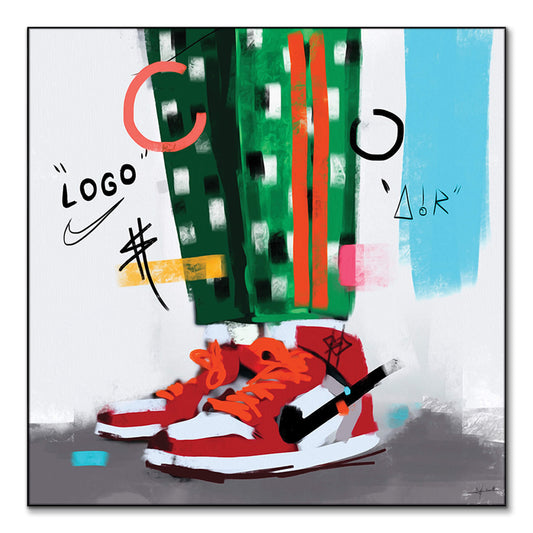
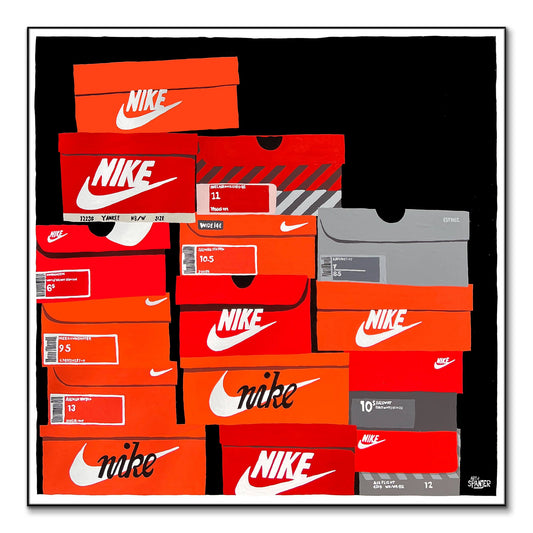
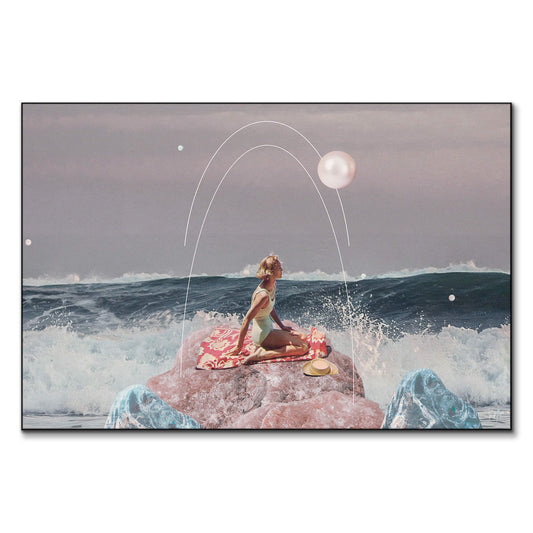
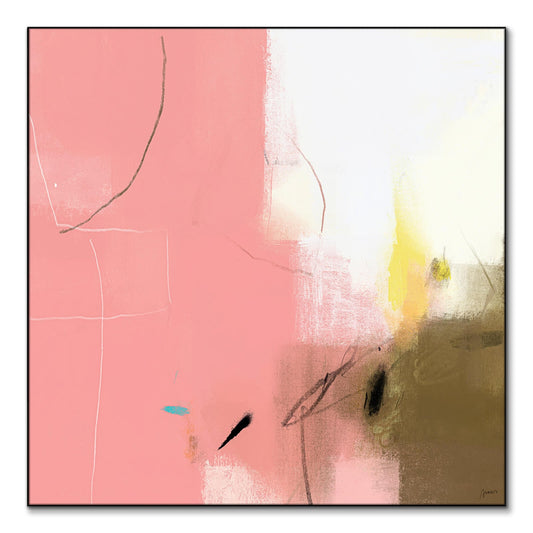
7 Modern Ways to Pair Wallpaper with Wall Art (Like A Designer)
Patterned wallpaper does not mean your walls are finished.
In fact, wallpaper and wall art often look better together. Wallpaper adds rhythm, texture, and movement. Art creates a focal point. Layer the two correctly, and the entire room feels more intentional, dimensional, and personal.
The trick is avoiding visual chaos. Go for contrast, not competition.
Here are seven creative ways to layer wall art over patterned wallpaper without overwhelming the room.
1. Choose Oversized Art That Can Hold Its Own

Small artwork can disappear against a busy wallpaper pattern. Go bigger.
One oversized piece creates a clear focal point and gives the eye somewhere to rest. It also keeps the wall from feeling cluttered with too many competing shapes, colors, and frames.
Choose artwork with a strong composition, recognizable subject, or large areas of solid color. The piece should feel substantial enough to stand apart from the wallpaper behind it.
This approach works especially well above a sofa, bed, dining table, or console.
Pro tip: Let the artwork fill approximately two-thirds of the furniture width below it for a balanced, intentional look.
2. Pull One Color From the Wallpaper

Your wall art does not need to match every color in the wallpaper. That can look forced.
Instead, choose one color from the pattern and repeat it within the artwork. It could be a small accent, a background shade, or one bold detail.
This creates a visual connection between the two layers without making them feel overly coordinated.
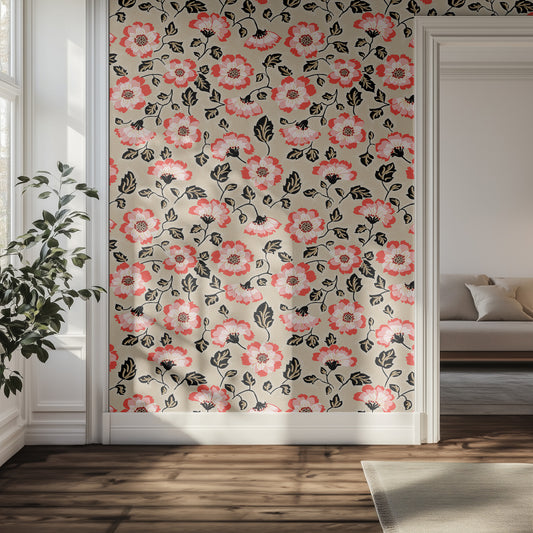
For example, pair green patterned wallpaper with art featuring a subtle olive detail, or place a warm rust-colored print over wallpaper with small terracotta accents.
3. Create Contrast With a Different Art Style

Layering works best when each element brings something different to the wall.
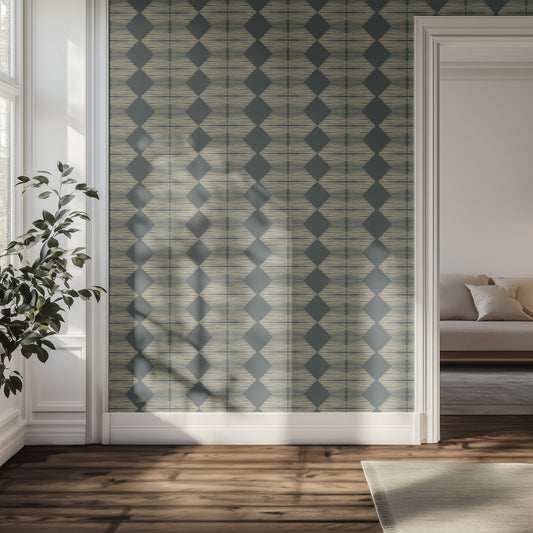
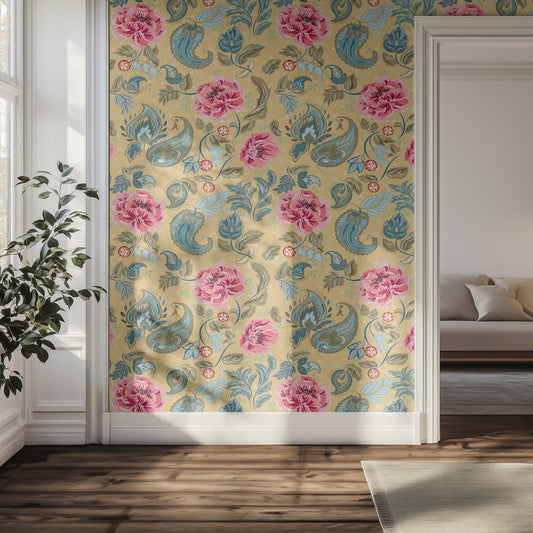
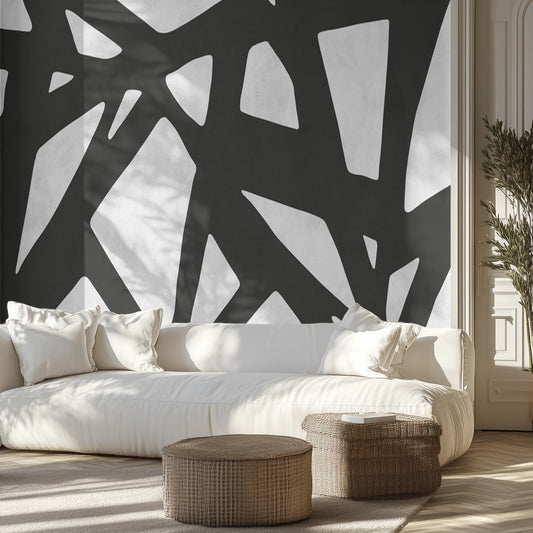
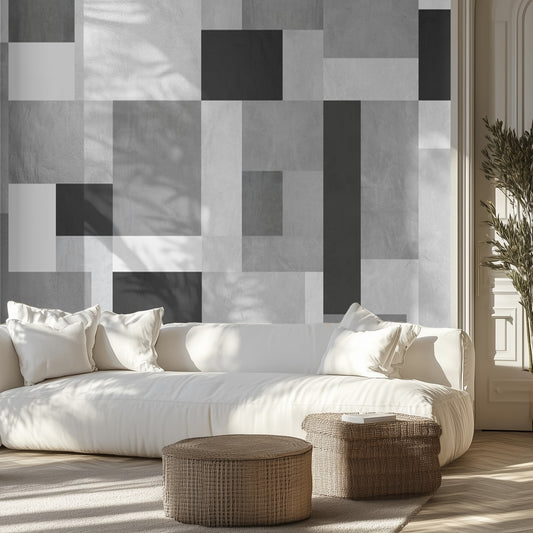
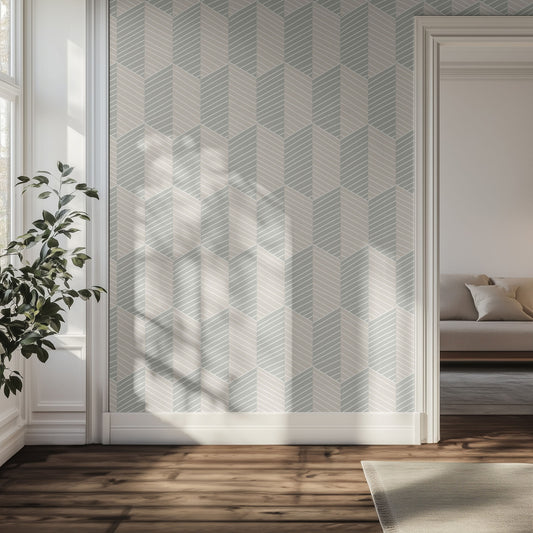
Pair traditional wallpaper with modern abstract art. Place a graphic black-and-white photograph over a colorful pattern. Hang expressive contemporary artwork over a structured geometric wallpaper.
Contrast creates tension, and tension makes a room interesting.
Avoid choosing art that mimics the wallpaper too closely. A floral painting over floral wallpaper can work, but it requires careful control of scale and color. For an easier approach, mix styles while maintaining one shared element, such as color or mood.
4. Use a Mat or Frame to Create Breathing Room

A frame can act as a visual buffer between the artwork and the wallpaper.
Wide white mats, solid-colored borders, and clean modern frames help separate the art from a detailed background. This gives the piece more definition and prevents it from blending into the background.
Black frames create stronger contrast. Light wood or gold frames soften the transition. White frames feel clean and modern.
Frameless artwork is a great option especially when the image has a strong edge or plenty of negative space. The goal is separation. However you create it, give the artwork room to stand out.
5. Mix Pattern Scales

Scale changes everything.
When the wallpaper has a small, repetitive pattern, layer it with artwork featuring bold shapes or large visual elements. If the wallpaper uses an oversized pattern, choose art with finer details, open space, or a simpler composition.
Using two patterns at the same scale can make the wall feel flat or overly busy. Changing the scale creates hierarchy. One element becomes the background. The other becomes the statement.
Think of it like an putting together an outfit. Tiny stripes with tiny checks can get chaotic. Tiny stripes with one oversized graphic? Much better.
6. Build a Controlled Gallery Wall

Yes, you can hang a gallery wall over patterned wallpaper.
Keep the frames consistent or limit the color palette within the artwork. This creates structure against the movement of the wallpaper.
You can also use fewer, larger pieces instead of filling every inch of the wall. Three to five carefully arranged artworks often feels more elevated than a crowded collection of tiny frames.
Before hanging anything, map out the gallery wall using paper templates or painter’s tape. Patterned wallpaper already adds visual activity, so spacing and alignment matter even more.
Pro tip: Keep approximately two to three inches between frames for a tighter, more cohesive arrangement.
7. Treat the Wallpaper Like Part of the Artwork
Stop thinking of wallpaper as a background you need to hide and use it as part of the composition.
Position artwork where the wallpaper pattern naturally frames it. Center the piece within a repeating shape. Place it between large pattern elements. Use the wallpaper’s lines to guide the eye toward the art.
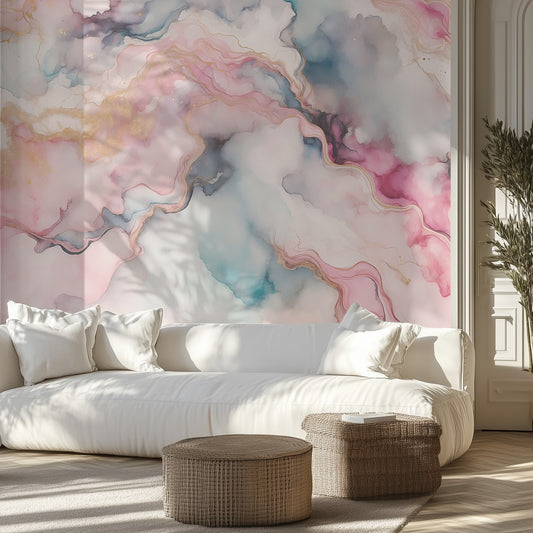
This approach feels especially intentional with murals, architectural patterns, stripes, arches, and large-scale geometric designs.
The wall becomes one layered installation rather than two separate decorating decisions.
How to Keep Wallpaper and Wall Art From Clashing
When combining patterned wallpaper and wall art, establish a clear visual hierarchy.
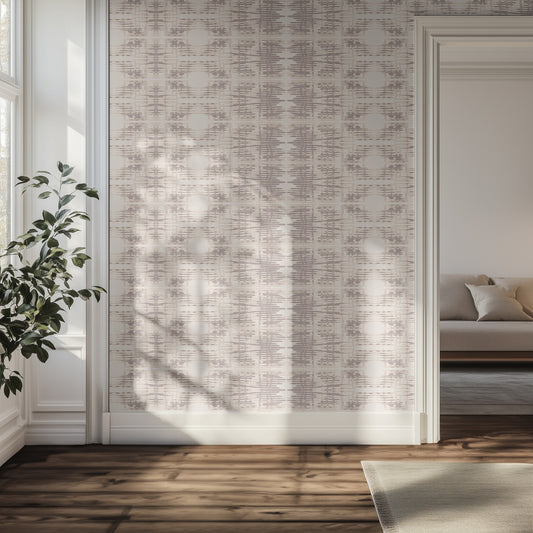
Decide which element should command the most attention. If the wallpaper is bold and colorful, choose simpler artwork. If the wallpaper is soft or tonal, use the art to bring contrast and personality.
Pay attention to scale, color, spacing, and frame style. You do not need every element to match. You just need them to feel connected.
Most importantly, do not be afraid of a wall with personality.
Together, wallpaper and wall art can make a room feel collected, creative, and completely original. Start with one strong piece, create contrast, and let each layer do its job.
Go bigger. Add the art.