Supreme & OFF-WHITE Make Noise in 2026: Is This the Return of the Hypebeast?
The Temperature Is Rising Again
There’s a certain tension in the air right now. The kind that used to show up before a major drop.
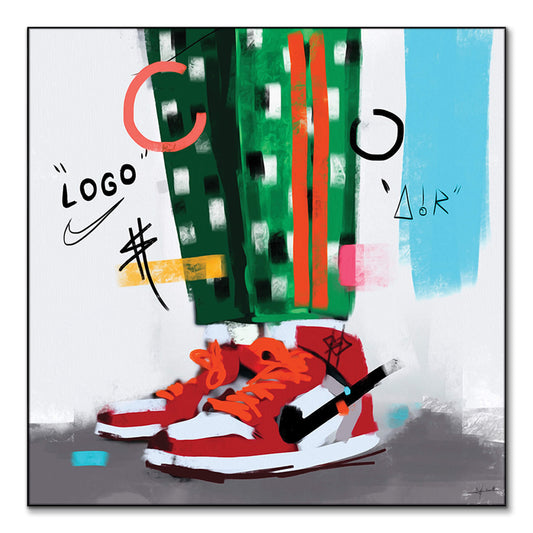
Supreme’s newest collection has people watching closely. The accessories are bold again. Slightly absurd. The kind of pieces that exist purely to spark reaction and signal access. Screenshots are circulating. Early resale listings are popping up within minutes. The conversation feels active in a way it hasn’t for a while. At the same time, the return of the white Air Jordan 1 High OG connected to Off-White and the legacy of Virgil Abloh has quietly shifted the mood. That original collaboration marked a turning point in sneaker culture. It blurred fashion and streetwear in a way that felt new at the time. Seeing it reappear now carries emotional weight for people who remember the first wave, and curiosity for those who missed it.
What makes this moment interesting is the feeling underneath it. Release calendars are being studied again. Rumors are spreading faster. There is a renewed attention to what drops, when it drops, and who manages to get it. This does not feel as nostalgia driven as recent trends. The return of brands like Supreme and Off-White to the headlines actually feels authentic. It feels like the early stages of another cycle beginning to turn. If the past decade was about stepping back from peak hype, 2026 might be the year the appetite returns. The question isn’t whether hypebeast culture still exists. It’s whether we’re about to see it surge again, reshaped for a new era but driven by the same instinct to chase what feels scarce and culturally charged.

When Hype Became Currency
To understand the current moment, we have to go back to the early 2010s, when hypebeast culture stopped being subcultural and became structural.
Supreme was already influential, but this was the era when Thursday drops turned into weekly rituals. Lines wrapped around city blocks. The red box logo operated as social proof. Owning a piece from a limited release signaled access to a fast-moving inner circle that existed online and offline at the same time.
Nike collaborations were evolving in parallel. When Off-White partnered with Nike on “The Ten” in 2017, sneaker culture shifted permanently. Virgil Abloh approached classic silhouettes like the Air Jordan 1 as design projects rather than simple retros. Exposed stitching, industrial typography, and visible construction reframed familiar shoes as conceptual objects.
Resale platforms such as StockX and GOAT accelerated everything. What had once been message board trading became a global marketplace with real-time pricing. Hype became quantifiable. It could be tracked, graphed, and speculated on.
This era established the formula: controlled scarcity, strong narrative, digital amplification, and immediate resale validation. The brands learned how to manufacture anticipation. Consumers learned how to participate in it.

From Gorpcore to Grails
As the original hype wave cooled, attention drifted toward utility and history. Gorpcore took hold. Technical jackets from Arc'teryx and trail runners from Salomon replaced logo-heavy hoodies. The flex became subtle. Performance fabrics, earth tones, and practicality signaled taste instead of logos plastered wherever they could fit.
At the same time, archive fashion started gaining ground. Vintage Helmut Lang. Early Raf Simons. Original Margiela. Pieces once buried in niche forums began circulating on curated resale accounts and mood boards. Rarity still mattered, but the emphasis shifted from what just dropped to what already existed. On the surface, these trends felt like a departure from hypebeast culture. They were quieter. More referential. Less obvious. But the underlying mechanics stayed the same. Scarcity still drove desire. Community validation still amplified value. The difference was aesthetic, not structural.
Now the pendulum is swinging again. The appetite for technical gear and archive pieces trained consumers to care about provenance and story. That same instinct easily transfers back to headline collaborations and spectacle releases. When a major sneaker retro tied to Virgil Abloh reappears, or when Supreme drops something that sparks immediate reaction, the infrastructure is already there. The audience understands how to decode it.
Gorpcore and archive fashion did not replace hype culture. They refined it. They taught the market patience and deeper literacy. What we are seeing in 2026 feels like those sensibilities merging with the energy of classic drop culture. The result is different from the first wave. It feels sharper. More intentional. And potentially bigger because it is building on everything that came in between.

What This Second Wave Could Become
If this is a revival, it doesn’t look identical to 2016. It feels more layered.
The audience is older now. Many of the people who once camped out for drops have careers, disposable income, and a long memory of what held value and what didn’t. At the same time, a younger generation is entering the space through resale apps, TikTok breakdowns, and archive accounts that treat past releases like museum artifacts.
Brands understand this dual audience. When Supreme leans into spectacle again, it lands differently because the mythology already exists. When a release connected to Off-White and the legacy of Virgil Abloh resurfaces, it carries both nostalgia and historical weight. These are not random plays. They tap into a documented era that has since become canon.
Resale platforms are also more mature. StockX and GOAT have normalized aftermarket pricing to the point where flipping is no longer taboo. It is part of the ecosystem. That transparency makes hype easier to track and harder to fake.
Looking ahead, the next phase of hype culture may revolve less around shock value and more around narrative precision. Collaborations will need context. Drops will need a reason beyond scarcity. The audience expects depth now.
Still, the core impulse remains the same. People want to feel early. They want to feel connected to something moving. They want to participate in a moment that feels bigger than a product.
If 2026 continues on its current trajectory, hypebeast culture will not just resurface as a trend. It will reestablish itself as a central engine in fashion and streetwear, shaped by a decade of evolution but fueled by the same instinct that powered its first rise.